
What Is the Fawn Response? A Deep Dive into the Trauma, Signs, and Healing Process
What Is the Fawn Response? A Deep Dive into the Trauma, Signs, and Healing Process When faced with danger or emotional threat, most people are
We are open on Saturdays now! | We are doing Virtual Appointments. | Most HMO Plans Accepted.

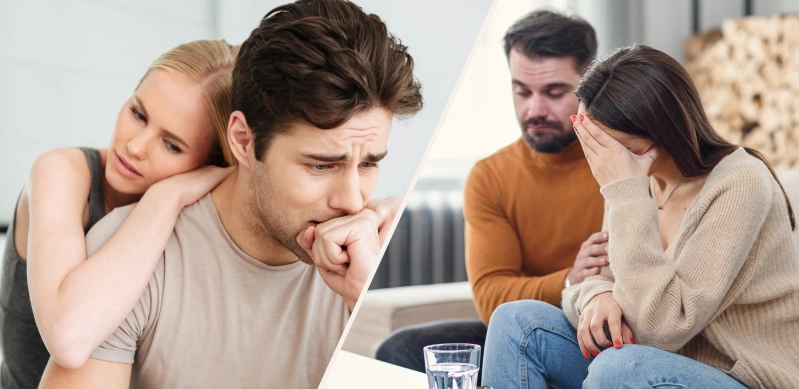
You are with someone who is kind, consistent, and genuinely caring, yet your mind refuses to settle. Anxious thoughts spiral. You second-guess every text, every silence, every small shift in mood. If this sounds familiar, you may be experiencing relationship anxiety, and you are far from alone.
Is relationship anxiety hurting your love life? The truth is, it can quietly erode even the most promising connections. But understanding what it is, where it comes from, and how to stop relationship anxiety in its tracks can make a profound difference. This guide covers everything from signs and causes to practical strategies and therapy options so you can start building the secure, fulfilling relationship you deserve.
Key Points at a Glance:
At its core, it is a persistent pattern of worry, self-doubt, and fear within a romantic relationship, even when there is no objective reason for concern. It can surface in new romances and long-term partnerships alike, creating an undercurrent of unease that makes it difficult to simply enjoy being with someone.
It is important to note that anxiety in a relationship is not classified as a standalone mental health diagnosis in the DSM-5. However, that does not minimise its impact. When severe enough, it can intersect with and contribute to diagnosable conditions. Only a qualified mental health professional can make that distinction.
Because relationship anxiety is not a formal diagnosis, there is no standardised symptom checklist. That said, people who experience anxiety in a relationship tend to report a recognisable cluster of thoughts and behaviours:
Attachment theory offers one of the most compelling explanations for anxiety in a relationship. When our earliest caregivers were unpredictable, sometimes warm and available, other times distant or unavailable, we learned that the people we need cannot fully be counted on. Rather than turning to self-reliance, we learned to cling to that unpredictable figure, hoping they would come through. This attachment wound can follow us into adult romance, making us overly dependent on partners for self-worth and hypersensitive to any hint that the relationship might be in jeopardy.
Even those who had secure childhoods can develop relationship anxiety after painful adult experiences. Betrayal, abandonment, or sudden loss in a past partnership can leave you hypervigilant to similar warning signs in subsequent relationships. You begin scanning your current partner’s behaviour for echoes of what hurt you before, and that pattern of scanning can itself generate the very anxiety you are trying to protect yourself from.
Relationship anxiety is not a solo experience; it ripples outward. Research indicates that high relationship anxiety in one partner consistently predicts lower relationship satisfaction for both people involved. Behaviours driven by anxiety, such as constant reassurance-seeking, scanning for conflict, and assuming the worst, place mounting pressure on a partner and gradually erode the trust and closeness that make relationships thrive.
This is how relationship anxiety becomes a self-fulfilling prophecy: you fear the relationship will fall apart, so you act in ways that push your partner away, which then confirms your original fear. Breaking this cycle requires intentional effort, and it starts with you.
Paying attention to your partner’s words and behavior, especially early in a relationship, is natural and helps build a connection.
Relationship anxiety pushes normal attentiveness into overdrive, making you hyper-focused on every small detail.
You may start dissecting texts for hidden meanings or subtle tone changes that may not actually exist.
Conversations get replayed repeatedly in your mind as you search for signs of disapproval or rejection.
You mentally create worst-case scenarios, turning even harmless situations into sources of doubt.
Some individuals may withdraw emotionally or create conflict to check how much their partner cares.
These actions often confuse and hurt the partner, damaging trust and communication.
Instead of resolving fears, overthinking, and testing behaviors deepen anxiety and reinforce relationship insecurity.
Learning how to stop relationship anxiety begins with shifting your focus — not to controlling your partner’s behaviour, but to developing skills within yourself. Here are the most effective evidence-informed approaches:
Relationship anxiety meditation is one of the most accessible tools available. Mindfulness practices train your brain to anchor in the present moment rather than drift into anxious future scenarios or painful past memories. Even ten minutes of daily meditation can help you observe anxious thoughts without being swept away by them.
When an anxious thought about your relationship surfaces, pause and examine it critically. Ask yourself: What concrete evidence supports this thought? What evidence contradicts it? What alternative explanations exist? This cognitive restructuring technique, a cornerstone of CBT, gradually weakens the grip of automatic negative thinking.
Part of learning how not to have anxiety in a relationship is accepting that no relationship comes with a cast-iron guarantee. Uncertainty is woven into every meaningful human bond. Practising acceptance of that uncertainty rather than compulsively seeking certainty through reassurance or control reduces the fuel that feeds relationship anxiety.
Knowing how to deal with someone with anxiety in a relationship often comes down to honest dialogue. If you are the anxious partner, sharing your inner experience with your partner clearly and without blame invites understanding rather than confusion. Your partner cannot meet needs they do not know about. Transparent conversation creates the safety that anxious minds so desperately need.
Distance amplifies every anxious tendency. When you cannot see your partner, your imagination can fill in the blanks in the most unhelpful ways. The strategies above become even more essential in long-distance situations. Beyond that, establishing predictable communication rhythms, agreeing on shared goals and a timeline, and scheduling intentional quality time together (even virtually) can significantly reduce the ambiguity that feeds anxiety.
The early stages of a relationship carry their own particular intensity. Feelings run high, patterns are not yet established, and the risk of rejection feels acute. Learning how to deal with new relationship anxiety means giving the partnership time to develop naturally rather than forcing certainty too soon, resisting the urge to over-analyse every interaction, and grounding yourself in the present rather than racing ahead to hypothetical outcomes.
Therapy Type | Description | How It Helps Relationship Anxiety |
Cognitive Behavioural Therapy (CBT) | A widely used, evidence-based approach for treating different types of anxiety. Focuses on identifying and changing negative thought patterns and behaviours. |
|
Couples Therapy | Therapy involves both partners working with a trained professional to improve relationship dynamics. |
|
Choosing the Right Therapist | Select a therapist whose approach and style align with your needs and comfort level. |
|
Relationship anxiety is not a life sentence. It is a learnable challenge that, when addressed, can lead to a deeper and more secure experience of love. While not a clinical diagnosis on its own, its impact on your relationship and well-being is very real it can undermine trust, trigger self-sabotaging behaviors, and quietly turn fears into reality.
The skills to manage and overcome it, mindfulness, cognitive reframing, tolerance of uncertainty, and honest communication, are all within reach. If you need additional support, Anxiety Disorder Treatment can help. Often, relationship anxiety is linked to an anxious attachment style formed long before your current partnership, and exploring this connection is the first step toward lasting change.
Q1. Can relationship anxiety happen even in a healthy relationship?
Ans: Yes, it can. Relationship anxiety often comes from internal fears and past experiences rather than the actual quality of the relationship, which means it can show up even with a loving and supportive partner.
Q2. Is relationship anxiety more common in certain personality types?
Ans: People who are naturally more sensitive, introspective, or prone to general anxiety may experience it more often. However, it can affect anyone regardless of personality.
Q3. Can social media make relationship anxiety worse?
Ans: Absolutely. Constant exposure to curated “perfect” relationships online can create unrealistic expectations and trigger comparison, leading to unnecessary doubts about your own relationship.
Q4. How long does relationship anxiety typically last?
Ans: It varies. For some, it may come and go during stressful periods, while for others it can persist until actively addressed through self-work or professional help.
Q5. Can taking a break from the relationship help reduce anxiety?
Ans: In some cases, a short, intentional break can provide clarity and emotional space. However, if anxiety is internally driven, it may follow you unless the root cause is addressed.
Q6. Does relationship anxiety go away on its own?
Ans: It may lessen over time, but it rarely disappears completely without conscious effort. Developing coping strategies is usually necessary for long-term improvement.
Q7. Can relationship anxiety affect physical health?
Ans: Yes, chronic anxiety can lead to physical symptoms such as fatigue, muscle tension, sleep disturbances, and reduced overall well-being.
Q8. Is it possible to have relationship anxiety in every relationship?
Ans: Yes, especially if the underlying causes, like attachment patterns or unresolved fears, remain unaddressed. The pattern often repeats until it is consciously worked through.
Q9. Can journaling help with relationship anxiety?
Ans: Journaling can be a powerful tool. Writing down your thoughts helps you identify patterns, separate facts from fears, and gain clarity over emotional triggers.
Q10. Should you tell your partner about your relationship anxiety?
Ans: In most cases, yes. Open and honest communication can build understanding and reduce misunderstandings, as long as it is expressed without blame or excessive dependence..
What Is the Fawn Response? A Deep Dive into the Trauma, Signs, and Healing Process When faced with danger or emotional threat, most people are

Ultra Rapid Cycling Bipolar 2: A Comprehensive Guide to Managing Rapid Mood Shifts Ultra Rapid Cycling Bipolar 2 is a severe and often misunderstood form

What is Not Showering a Sign Of? A Compelling Insight Into Personal Hygiene When it comes to personal hygiene, there are a few habits that

As a skilled psychiatrist, I specialize in preventing, diagnosing, and treating mental health issues, emotional disorders, and psychotic conditions. Drawing on diagnostic laboratory tests, prescribed medications, and psychotherapeutic interventions, I strive to provide comprehensive and compassionate care for my patients in Frisco and McKinney, Texas, while assessing their biological, psychological, and social components of illnesses. I am committed to helping them achieve healthier and more fulfilling lives through my work.