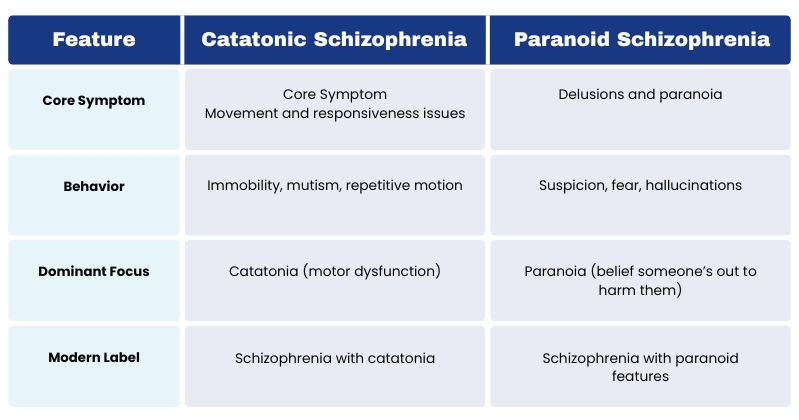
However, modern psychiatry no longer uses this label. In 2013, the American Psychiatric Association (APA) removed “catatonic schizophrenia” from the Diagnostic and Statistical Manual of Mental Disorders (DSM-5). The World Health Organization (WHO) later followed, removing it from the International Classification of Diseases (ICD-11) in 2019.
Instead of being a separate diagnosis, catatonia is now treated as a specifier, meaning it can appear with schizophrenia, bipolar disorder, depression, autism, or even medical illnesses.
In essence, catatonic schizophrenia means schizophrenia that presents with catatonic features such as mutism, rigidity, posturing, or repetitive movements. Recognizing these symptoms early is essential because catatonia can be life-threatening if untreated, yet often responds remarkably well to the right therapy.
In simple terms, catatonic schizophrenia means that a person has schizophrenia (a psychotic disorder affecting perception, behavior, and thought) plus significant motor or behavioral abnormalities, ranging from total stillness to uncontrollable motion.
While the term itself is historical, the catatonic state remains clinically relevant. Understanding what it means helps both families and clinicians identify warning signs early and seek prompt intervention.
Catatonia is a syndrome, a cluster of motor and behavioral symptoms, where the brain’s ability to regulate movement, speech, and response becomes disrupted. People in a catatonic state might appear frozen, unresponsive, or perform repetitive and purposeless actions.
Catatonia can occur in various mental health and medical conditions, but schizophrenia is one of the most common. Studies suggest that between 10% and 25% of people with schizophrenia experience catatonic symptoms at some point.
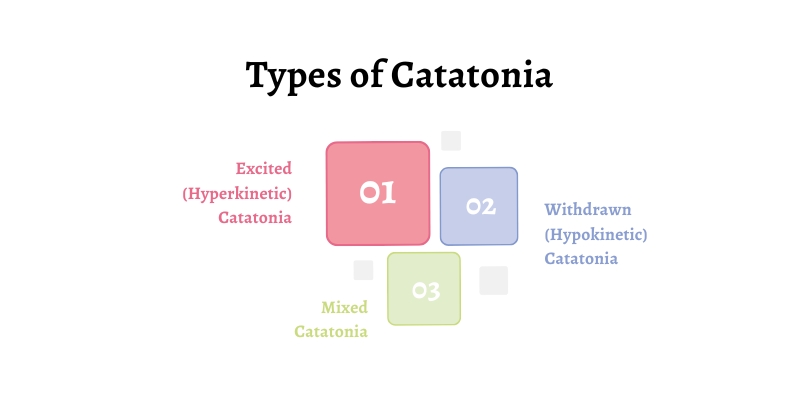
Catatonia isn’t static; it can shift from immobility to agitation rapidly. These fluctuations make diagnosis challenging. Some people remain still for hours or days, while others experience bursts of motion or emotional expression.
The exact cause of schizophrenia and catatonia remains unknown, but researchers believe it results from a complex interplay of brain chemistry, genetics, and environmental factors.
No single cause explains catatonic schizophrenia; it’s typically a combination of biological vulnerability and environmental stressors that trigger symptoms.
To confirm catatonia, a person must exhibit at least three of the 12 classic symptoms alongside schizophrenia-related features such as delusions or hallucinations.
While catatonic schizophrenia can be alarming to witness, it is highly treatable when recognized early. Because catatonia affects both the mind and body, treatment focuses on restoring movement, reducing psychosis, and addressing underlying causes.
In rare cases, catatonia can escalate to malignant catatonia, involving:
This form can be fatal if not treated immediately, typically requiring intensive hospital care and urgent ECT.
Understanding the difference is essential for proper treatment, as catatonic symptoms require different medications and urgent care.
Catatonic schizophrenia, though no longer a formal diagnosis, remains one of the most fascinating and serious expressions of schizophrenia. Defined by extreme movement disturbances, from total stillness to frantic agitation, it highlights the complex link between the brain, body, and mind.