
Bipolar Relationships: Alcoholism, Spouse, Signs, & Pattern
Bipolar Relationships: Alcoholism, Spouse, Signs, & Pattern Living with bipolar disorder can be a challenge for both the person affected as well as their family,
We are open on Saturdays now! | We are doing Virtual Appointments. | Most HMO Plans Accepted.

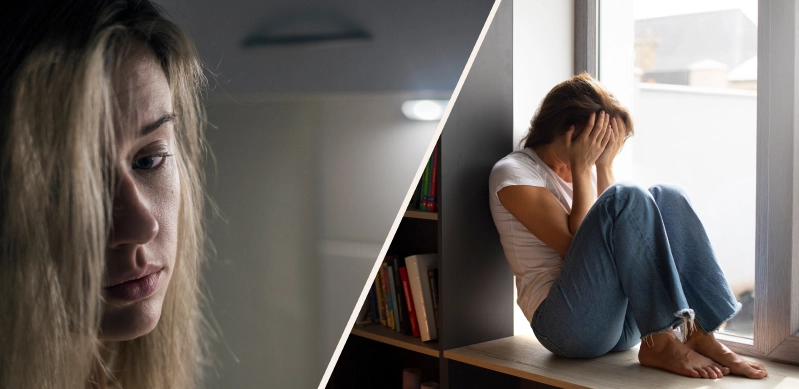
That is agoraphobia. And for the millions of adults and teens living with it, the most urgent question is rarely a diagnostic one. It is a deeply human one: Can agoraphobia be cured, or is this just my life now?
The answer, backed by decades of clinical research and the lived experience of patients at Faith Behavioral Health, is this: agoraphobia is one of the most treatable anxiety disorders that exists. Not managed. Not suppressed. Treated with meaningful, lasting recovery is possible for the vast majority of patients who receive proper care.
Agoraphobia is widely misunderstood, even by those who have it. Most people assume it simply means fear of open spaces. In clinical reality, it is significantly more nuanced and more debilitating.
The DSM-5 defines agoraphobia as marked, persistent fear or anxiety about two or more of the following situations:
The core fear is not the location itself; it is the fear of what might happen there, and the belief that escape would be impossible or that help would not be available if panic or incapacitation occurred.
For many patients, agoraphobia begins with a single frightening episode, often a panic attack in a public place. The brain registers that location as dangerous, and avoidance begins. What starts as skipping one grocery store trip quietly becomes an inability to leave the house at all.
Agoraphobia rarely appears all at once. It follows a pattern of gradual constriction:
Understanding this progression reveals exactly where clinical intervention can interrupt the cycle at every stage, not just the last one. Agoraphobia almost always develops alongside or from an underlying anxiety disorder, which is why treating the full clinical picture, not just the avoidance behavior, is essential for lasting recovery.
Patients frequently ask what causes agoraphobia to develop and why them, specifically. The honest clinical answer is: agoraphobia is multifactorial. No single cause produces it. Instead, several biological, psychological, and environmental forces converge.
Category | Root Cause | How It Contributes |
Neurobiological | Overactive amygdala (the brain’s fear center) | Generates intense fear signals disproportionate to the actual threat |
Neurobiological | Dysregulated norepinephrine & serotonin | Creates baseline anxiety that lowers the threshold for panic |
Genetic | Family history of anxiety disorders | Heritability estimates for panic disorder with agoraphobia range from 30–40% |
Psychological | Catastrophic misinterpretation of bodily sensations | Racing heart = “I’m dying” rather than “I’m anxious.” |
Psychological | Low anxiety tolerance/intolerance of uncertainty | Any unfamiliar sensation or situation triggers avoidance |
Trauma & Life Events | Childhood trauma, abuse, or neglect | Sensitizes the nervous system and distorts perception of safety |
Trauma & Life Events | Prior panic attacks in public settings | Conditioned fear response associates those locations with danger |
Environmental | Prolonged social isolation (e.g., post-pandemic period) | The nervous system habituates to confinement; the outside world becomes unfamiliar |
Environmental | Overprotective upbringing | Limits the development of self-efficacy and tolerance for discomfort |
Co-occurring Conditions | Panic disorder, GAD, PTSD, depression | Each amplifies the fear-avoidance cycle that underlies agoraphobia |
Regardless of the original root cause, one mechanism maintains agoraphobia over time: the fear-avoidance cycle. Understanding this cycle is central to understanding why agoraphobia does not go away on its own and why treatment is essential.
The depression that frequently accompanies agoraphobia is not coincidental; it is a direct consequence of this shrinking world. When depression enters the picture, it drains the motivation needed to engage with exposure-based recovery, creating a cycle within a cycle that requires concurrent treatment.
Knowing what the symptoms of agoraphobia are matters because many people live with it for years before receiving a correct diagnosis. They are told they have social anxiety, depression, or are simply “nervous people.” The symptoms span three distinct categories:
Symptom Type | What the Person Experiences |
Physical Symptoms | Racing or pounding heartbeat, chest tightness, shortness of breath, dizziness or lightheadedness, nausea, sweating, trembling, numbness or tingling sensations |
Cognitive Symptoms | Persistent fear of losing control in public, fear of embarrassment, belief that escape is impossible, catastrophic thinking about health, derealization (feeling unreal or detached) |
Behavioral Symptoms | Avoiding specific locations or situations, requiring a companion to leave home, restricting activities to a shrinking “safe zone,” canceling plans, leaving jobs or schools, becoming homebound |
Emotional Symptoms | Chronic anticipatory anxiety (dreading future situations), shame and embarrassment about limitations, hopelessness, grief over lost independence, depression |
Because agoraphobia shares symptoms with several other disorders, accurate diagnosis requires a trained psychiatrist or psychiatric nurse practitioner. The following distinctions matter for treatment planning:
Condition | Overlap with Agoraphobia | Key Distinction |
Avoidance of social situations | Fear is of judgment/embarrassment; agoraphobia fears the inability to escape or get help | |
Specific Phobia | Avoidance of specific stimuli | Phobias are stimulus-specific; agoraphobia involves clusters of situations |
Compulsive avoidance, ritualistic safety behaviors | OCD avoidance is driven by intrusive thoughts and neutralizing rituals; agoraphobia by escape-impossibility fear | |
PTSD | Avoidance, hypervigilance | PTSD avoidance is tied to trauma reminders; agoraphobia to escape impossibility |
Panic Disorder | Panic attacks, anticipatory anxiety | Panic disorder without agoraphobia does not involve significant situational avoidance |
Depression | Withdrawal, reduced activity | Depression withdrawal stems from low mood/anhedonia; agoraphobia withdrawal from fear. |
This is the question that brings most people to our doors, and it deserves a direct, honest answer. Yes. Agoraphobia can be cured or, more precisely, brought to full remission in the majority of patients who receive evidence-based treatment and engage consistently with their care plan.
“Cured” in psychiatric medicine means sustained remission: a return to full functioning, freedom from avoidance behaviors, and the ability to move through the world without the disorder dictating the terms. This is not a theoretical outcome. It is what happens every day in clinics like Faith Behavioral Health for patients who commit to treatment.
What determines the outcome? Research points to four primary factors:
Understanding how to recover from agoraphobia requires clarity on what the treatment actually involves. Recovery is not a matter of willpower or “pushing through.” It is a structured clinical process, delivered by trained professionals, that systematically retrains the brain’s fear response.
Treatment | What It Addresses | Who Benefits Most |
Cognitive Behavioral Therapy (CBT) | Distorted thoughts, avoidance behaviors, and catastrophic interpretations | All patients’ first-line treatment for agoraphobia |
In-Vivo Exposure Therapy | The avoidance cycle builds tolerance to feared situations through graduated real-world exposure | Patients who have begun avoiding specific places or situations |
Interoceptive Exposure | Fear of physical sensations (racing heart, breathlessness) that trigger panic | Patients with significant panic symptoms alongside agoraphobia |
Dialectical Behavior Therapy (DBT) | Emotion regulation, distress tolerance, particularly for patients with co-occurring bipolar disorder or mood instability | Patients with co-occurring mood disorders or trauma |
SSRI / SNRI Medication | Underlying neurochemical anxiety reduces baseline fear response and panic frequency | Moderate-to-severe agoraphobia; patients are unable to engage with therapy due to symptom severity |
Telepsychiatry | Removes geographic barrier to care; allows initial treatment from the safety of home | Patients too symptomatic to travel to in-person appointments |
Many patients search for how to overcome agoraphobia naturally, meaning without medication, or before pursuing formal clinical care. This is a legitimate starting point, and there are evidence-informed strategies that support recovery. But there is an important nuance:
Natural strategies work best as adjuncts to, not replacements for, professional treatment. For mild cases, they may be sufficient. For moderate-to-severe agoraphobia, they reduce suffering and accelerate clinical progress but are unlikely to produce full remission on their own.
Activates the parasympathetic nervous system and directly counteracts the physical escalation of panic. Practice 4-7-8 breathing (inhale 4 counts, hold 7, exhale 8) daily and during moments of anticipatory anxiety.
Create a personal fear hierarchy — a list of avoided situations ranked from least to most feared. Systematically approach them, beginning with the least threatening, while tolerating anxiety without escaping.
Regular aerobic exercise reduces baseline anxiety, improves stress resilience, and has been shown to decrease panic attack frequency — independent of other interventions.
Anxiety disorders worsen significantly with sleep deprivation. Consistent sleep schedules, limiting screens before bed, and avoiding caffeine after noon all reduce baseline nervous system reactivity.
Safety behaviors (always carrying a phone, only going out with a companion, sitting near exits) maintain the fear. Gradually reducing these is part of sustainable recovery.
MBSR (Mindfulness-Based Stress Reduction) has demonstrated reductions in anxiety sensitivity, the tendency to fear anxiety sensations themselves, which is central to agoraphobia maintenance.
Caffeine and alcohol both increase anxiety sensitivity and disrupt sleep architecture. Their reduction is a practical, immediate step toward lowering symptom severity.
Phase | Timeframe | What Happens |
Assessment & Stabilization | Weeks 1–3 | Comprehensive psychiatric evaluation, diagnosis confirmation, and treatment plan developed. Medication is begun if indicated, with onset of effect: 2–4 weeks for SSRIs. |
Early Psychoeducation & Skill Building | Weeks 2–6 | CBT sessions introduce cognitive restructuring. Patient learns to identify distorted thoughts and begin breathing/grounding techniques. |
Graduated Exposure Phase | Weeks 4–16 | Systematic in-vivo exposure to feared situations begins. Anxiety tolerance builds. Safe zone expands incrementally. Most patients experience meaningful functional gains here. |
Consolidation & Relapse Prevention | Months 4–6 | Skills are reinforced. Medication was tapered if appropriate. Patient develops a personalized relapse-prevention plan. |
Sustained Remission & Maintenance | 6 months onward | Patient functions without significant avoidance. Occasional check-ins. Natural lifestyle strategies maintain gains. Many patients describe this phase as having their life back. |
Recovery from agoraphobia is not a straight line. Most patients experience weeks of meaningful progress followed by a difficult day that feels like a setback and then another week of progress. This is neurologically normal. The brain is being rewired, and like any rewiring process, it is nonlinear.
What professional psychiatric care provides that self-help alone cannot:
The world outside your comfort zone is not permanently out of reach. Agoraphobia is a condition, not an identity, and conditions can be treated. Recovery looks different for everyone. Some patients move through it in months. For others with longstanding, severe agoraphobia, it takes longer and requires more support.
Understanding what causes agoraphobia to develop helps remove the shame that keeps so many people from seeking care. Recognizing the symptoms of agoraphobia, physical, cognitive, behavioral, and emotional, helps you name what you are experiencing rather than suffering in silence. And knowing that agoraphobia can be cured through evidence-based clinical care makes the path forward clear.
Yes , with evidence-based treatment like CBT and medication, most patients achieve full, lasting remission.
It ranges from mild to severe, but regardless of intensity, it is highly treatable with the right professional care.
It most commonly develops between ages 25 and 35, often triggered by a first panic attack or a period of significant stress.
Gradual self-exposure, diaphragmatic breathing, regular exercise, and reducing caffeine can help, but professional support is essential for full recovery.
Yes , it can relapse during high-stress periods, which is why a personalized relapse-prevention plan remains an essential part of long-term recovery.
Yes, in children, it often disguises itself as school refusal or separation anxiety, making early professional evaluation critical for accurate diagnosis.
Absolutely, it silently strains marriages, erodes friendships, and costs careers long before most sufferers ever seek professional help.
Bipolar Relationships: Alcoholism, Spouse, Signs, & Pattern Living with bipolar disorder can be a challenge for both the person affected as well as their family,

Understanding Mental Health Advocacy: Breaking Barriers and Building Support Mental health advocacy is a vital aspect of promoting awareness, understanding, and support for individuals facing

Somatic Exercises for Anxiety Simple Techniques to Soothe Your Mind and Body Anxiety can feel like a constant whirlwind—racing thoughts, a pounding heart, and an

As a skilled psychiatrist, I specialize in preventing, diagnosing, and treating mental health issues, emotional disorders, and psychotic conditions. Drawing on diagnostic laboratory tests, prescribed medications, and psychotherapeutic interventions, I strive to provide comprehensive and compassionate care for my patients in Frisco and McKinney, Texas, while assessing their biological, psychological, and social components of illnesses. I am committed to helping them achieve healthier and more fulfilling lives through my work.